

What Is Hyaluronic Acid For?
Hyaluronic acid is one of the most widely used ingredients in skincare, and as we’ve already seen (in this blog), it’s an essential active for your moisturizer. But are they all the same? Can it be combined with any other product?
After seeing it everywhere, it’s about time we really got to know it — so let’s dive in!
What is hyaluronic acid and what is it used for?
It’s an ingredient that can retain up to 1,000 times its weight in water — or in other words, it works like a “sponge” for the skin, since it absorbs moisture and pulls it into the deeper layers.
It’s a molecule naturally present in our body, and because of its ability to retain water, it works amazingly well to keep the skin hydrated. But that’s not all: hyaluronic acid also improves skin elasticity, helps reduce the appearance of fine lines, and gives us softer, more supple skin.
It’s like the white t-shirt in your skincare wardrobe — a staple that never fails and is essential in any routine if you want healthy skin and a strong skin barrier.
What’s the best hyaluronic acid?
The quality of the hyaluronic acid in a formula is something that’s really hard to determine as a consumer — although the brand and final product price can give us some clues.
In our case, we use high-quality hyaluronic acid and always combine multiple molecular weights. This, friend, is the key to a truly effective hyaluronic acid product. Why? Because that means it contains different molecule sizes — larger ones will stay on the surface of the skin, hydrating it from the outside, while smaller ones will penetrate deeper layers and deliver a much more complete and long-lasting hydration.
In Cloud Moisturizer, for example, we’ve combined four different molecular weights of hyaluronic acid. That’s why even with its lightweight texture, it’s super hydrating!

Can I mix hyaluronic acid with other ingredients?
Absolutely, friend! Hyaluronic acid is one of the most easy-to-combine skincare actives — and even though it’s called an “acid”, it’s very well tolerated by the skin. It doesn’t exfoliate like other acids (like mandelic or glycolic), and it doesn’t irritate or cause redness.
You can apply an exfoliant like The Porefect Exfoliant, and then follow with a moisturizer containing hyaluronic acid like Cloud Moisturizer with no issues.
In fact, it will boost that freshly exfoliated glow, since Cloud deeply hydrates and strengthens the skin barrier.
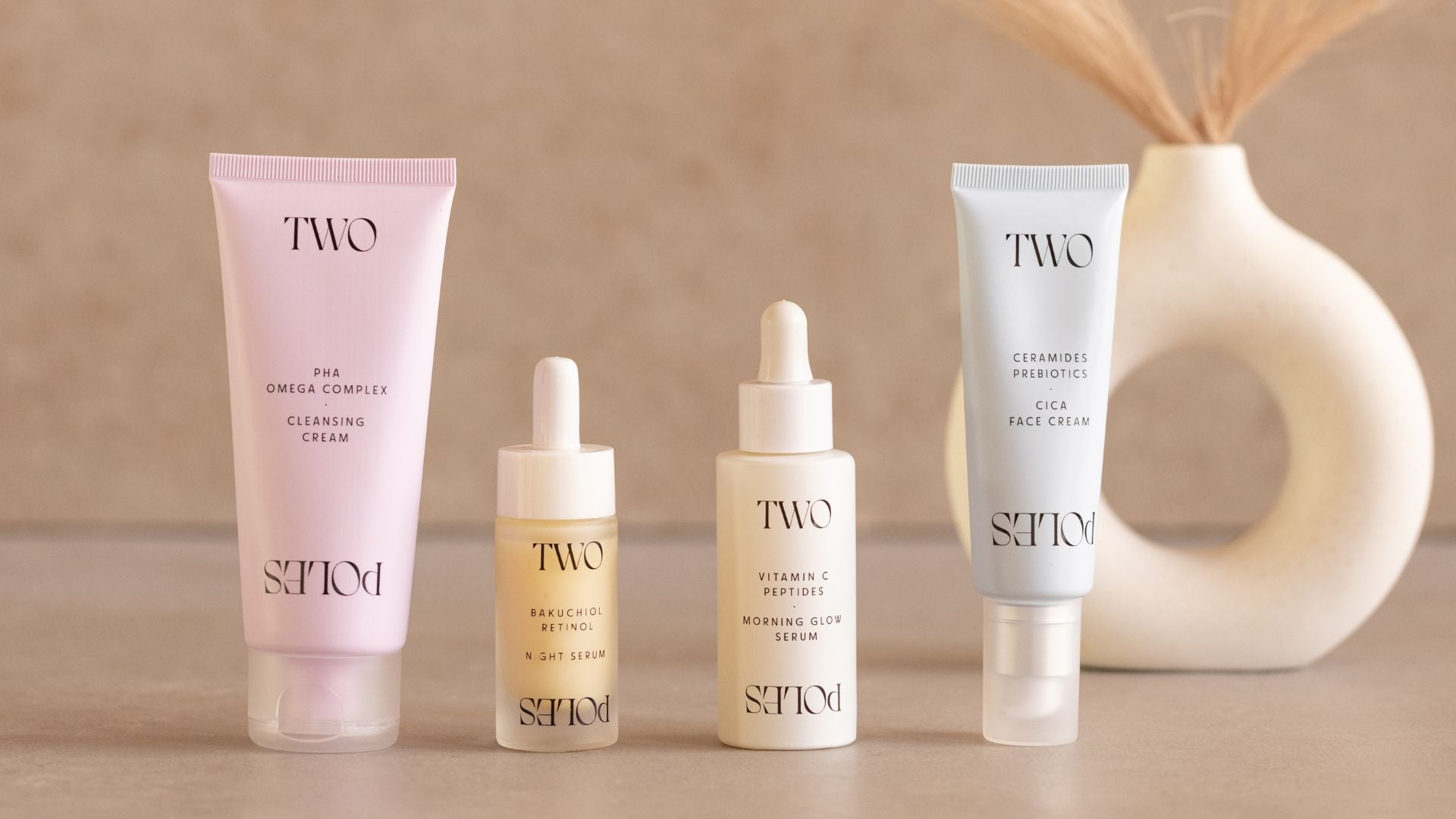
You can also combine hyaluronic acid with retinol, for example. Just make sure to let the retinol absorb for 10–15 minutes before applying a hyaluronic-rich moisturizer. If your cream also includes prebiotics and growth factors, like Cica Face Cream, you’ll boost skin regeneration even further.
Now you probably finally understand why this ingredient is in practically every skincare product you own — it’s a true wardrobe essential!
But if you still have any questions, remember you can always write to us — we’ll be more than happy to help.
Big hug, see you at @twopolescosmetics & @partners.incream
Anna
xx



,%20it%E2%80%99s%20an%20essential%20active%20for%20your%20moisturizer.%0ABut%20are%20they%20all%20the%20same?%20Can%20it%20b...)
Leave a comment
This site is protected by hCaptcha and the hCaptcha Privacy Policy and Terms of Service apply.